Natural Gas
Natural gas is an important part of the global energy mix, providing reliable and flexible energy for homes, industry and electricity generation. It supports energy security and economic growth while playing an important role in meeting growing energy demand and supporting the transition to a lower-emissions future.
Natural Hydrogen
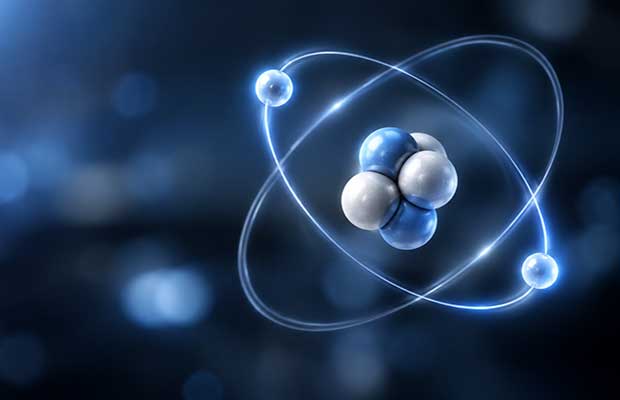
Natural hydrogen, also known as white, gold or geologic hydrogen, has the potential to revolutionise global energy markets due to its numerous advantages over existing energy options.
Unlike hydrogen produced from fossil fuels, geologic hydrogen is naturally occurring.
It is primarily created when water interacts with ultra-mafic rocks that are rich in iron and magnesium. These rocks are in the earth’s mantle (the layer between the earth’s crust and core). The process is called serpentization. The water oxidises the iron in the rocks and this produces hydrogen.
Due to its formation occurring naturally, geologic hydrogen has significantly lower production costs and carbon emissions.
Constellation Resources has secured one of the largest prospective areas for natural hydrogen in Western Australia, covering 87,000 square kilometres.
For more information on this resource and our projects click here.
Watch the video below to learn how natural hydrogen could transform the world’s energy supplies, Australia’s vital role in the global industry, and how soil gas sampling helps measure hydrogen composition at a site.

Hydrogen Economics - High Margin/Low Capital
Current sell price H2 ~ US$9 kg,
Current production price white H2 ~ US$2 kg
Hydrogen production cost ranges 2022-2023, $US
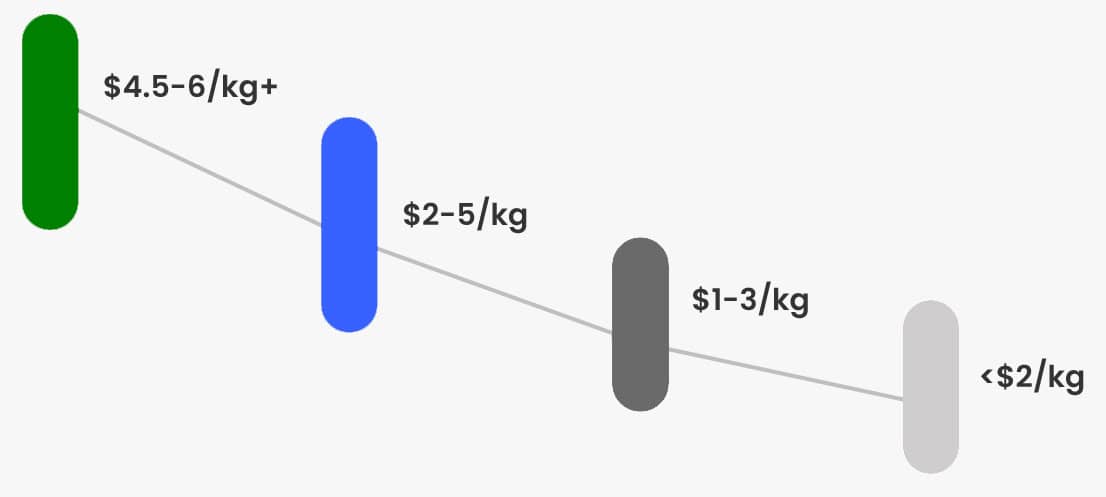
White hydrogen is a high margin, low capital resource.
It is currently produced at US $2kg and sold at US $9/kg.
This compares very favourably to the profit margins of green, blue and grey hydrogen.
Green Hydrogen
Made by using renewable energy to electrolyse water. H2 seperated from H2O. Production is expensive
<1.0kg CO2e per kg H2#
Blue Hydrogen
Made from natural gas.
H2 separated from CH4.
Carbon emissions captured.
-3.0kg CO2e per kg H2#
Grey Hydrogen
Made from natural gas.
H2 separated from CH4.
Carbon emissions not captured.
-9.0kg CO2e per kg H2#
White (Natural) Hydrogen
Naturally occurring,
found in the subsurface.
Hydrogen made underground.
<1.0kg CO2e per kg H2
* Geologic hydrogen (white) has a carbon intensity of 0.37 kg CO2e per kilogram of hydrogen when including the embodied emissions of the well casing and hydrogen emissions, according to a published paper in Joule by Stanford’s Dr. Adam Brandt.
Numerous ranges of production costs exist due to changing variables such as, but not limited to, technology advancement, existing infrastructure, feedstock price etc Source: Ranges sourced from BloombergNEF, IEA, Lazard, IRENA. ‘At the dawn of a hydrogen era’, Clota Varde Feb 2023
# Modified from koloma article. Values obtained from 2022 GREET Model. Carbon intensity of hydrogen production for natural hydrogen was calculated based on Brandt, A. Greenhouse Gas Intensity of Geologic Hydrogen Produced from Subsurface Deposits. 2023. EarthArXiv preprint. Calculation maintained consistency with GREET methodology.
Copper
The value of copper in today’s market is significant, and is expected to continue growing, driven by the critical role this metal plays in the global transition to clean energy and electrification.
Copper is essential for renewable energy systems, electric vehicles (EVs), energy storage, and electrical infrastructure due to its excellent conductivity.
As demand for these technologies surge, and the global supply of copper continues to decline, the outlook for copper remains strong.
Gold
Gold has long played a meaningful role in contributing to a Nation’s economic future. As a stable store of value, gold supports financial resilience and diversification, especially during periods of economic uncertainty.
As one of the Australia’s largest export commodities, gold plays a significant role in our economy.
Moreover, advancements in technology are increasing gold’s use in clean technologies, such as in renewable energy systems and electronics, due to its superior conductivity and corrosion resistance.